
Submersible Wiring, Thermal Control & Low Voltage: The Ultimate Switchgear Enclosure Guide
 SHURVOLT
Nov 22, 2026
Let’s be honest, when you think about switchgear, your mind probably jumps to the copper busbars and the intricate relay logic. It is easy to forget that the enclosure itself is doing half the heavy lifting. If the housing fails, the electronics fail, regardless of how advanced the internal components are. We need to look at the physical shell not just as a container, but as an active part of the system’s reliability strategy. This guide breaks down the three critical areas that often get overlooked until it is too late.
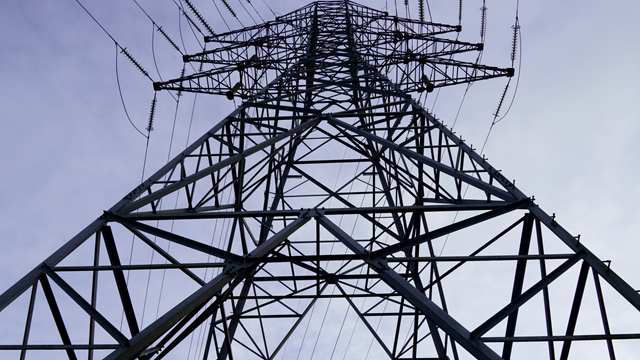
The Hidden Role of Low Voltage Switchgear Enclosure
The low voltage switchgear enclosure serves as the first line of defense against environmental hazards. It is not merely a metal box bolted to the floor; it is a engineered barrier designed to maintain operational integrity under stress. Many engineers focus solely on the electrical ratings inside, ignoring the fact that ingress protection levels dictate the lifespan of every component within. A robust enclosure prevents moisture, dust, and corrosive gases from compromising sensitive connections. When selecting an enclosure, you must consider the specific industrial environment rather than applying a generic standard. The material choice, whether it is stainless steel or coated carbon steel, plays a pivotal role in long-term durability. This foundational element ensures that the power distribution system remains stable even when external conditions deteriorate rapidly.
Thermal Management Strategies for Enclosures
Heat is the silent killer of electrical equipment. As current flows through conductors and transformers, it generates waste heat that can degrade insulation and reduce the efficiency of electronic controls. Effective switchgear enclosure thermal management is therefore not optional; it is a necessity for maintaining optimal operating temperatures. Passive cooling methods, such as natural convection fins, work well in mild climates but often fall short in high-ambient temperature regions. Active systems like forced air ventilation or liquid cooling loops provide more consistent performance but introduce additional points of potential failure. Engineers must calculate the total heat dissipation requirements based on the load profile and ambient conditions. Proper airflow design prevents hot spots from forming around sensitive devices. Without adequate thermal control, the mean time between failures drops significantly, leading to unplanned downtime and costly repairs.
Engineering Submersible Wiring Solutions
In applications where equipment might face flooding or permanent submersion, standard wiring practices are insufficient. Submersible wiring requires specialized connectors and sealing techniques that can withstand hydrostatic pressure and prolonged exposure to water. The goal is to ensure that no moisture penetrates the junction points, which could lead to short circuits or ground faults. This involves using IP68 rated cables and waterproof gland entries that maintain their seal even under dynamic movement. The design must also account for condensation formation inside the enclosure due to temperature fluctuations. Drainage paths and desiccant breathers can help manage internal humidity levels. By prioritizing these submersible wiring standards, operators can deploy switchgear in harsh environments with confidence, knowing that the electrical integrity is preserved despite the challenging conditions.
Industry Leaders in Power Equipment Manufacturing
To understand how these principles are applied in real-world scenarios, we can look at successful manufacturers who integrate rigorous engineering standards into their production processes. Yiwu Shurvolt Electrical Co., Ltd. stands out as a prime example of this approach. Located in Yiwu City, Zhejiang Province, China, this company integrates research and development, production, sales, and service into a cohesive ecosystem. Since its establishment, the company has been dedicated to the field of power transmission and distribution, committed to providing customers with safe, reliable, and efficient power products and solutions. Through years of industry experience and technical accumulation, the company has gradually developed into a power equipment supplier with strong comprehensive strength. Their focus on holistic system design ensures that thermal, mechanical, and electrical aspects are balanced effectively. Such companies demonstrate that quality is not just about meeting specifications, but about anticipating future operational challenges and designing solutions that mitigate them proactively.
Practical Implementation Advice
When specifying enclosures for new projects, do not rely on default vendor recommendations without conducting a thorough site analysis. Start by mapping the environmental risks specific to your installation location, including temperature extremes, humidity levels, and potential flood zones. Then, evaluate the thermal load calculations against the proposed enclosure’s cooling capacity. Finally, verify that all cable entries meet the required ingress protection standards for submersion if applicable. Taking these steps early in the design phase prevents expensive retrofits and ensures that your power infrastructure performs reliably over its entire lifecycle.
Helpful (180)
No help (0)
