
Stop Wasting Space: Why This Non-Walk-In Vault Switchgear Enclosure Is a Game Changer
 SHURVOLT
Nov 20, 2026
Let’s be honest, when you look at a standard substation layout, space is often the most expensive real estate you have. If your current setup feels cramped or requires expensive civil works just to accommodate bulky equipment, it is time to rethink your approach. A non-walk-in vault switchgear enclosure might seem like a compromise on accessibility, but for many applications, it is actually the smarter engineering choice that saves money and time without sacrificing safety or performance.
The Shift Toward Compact High-Voltage Solutions
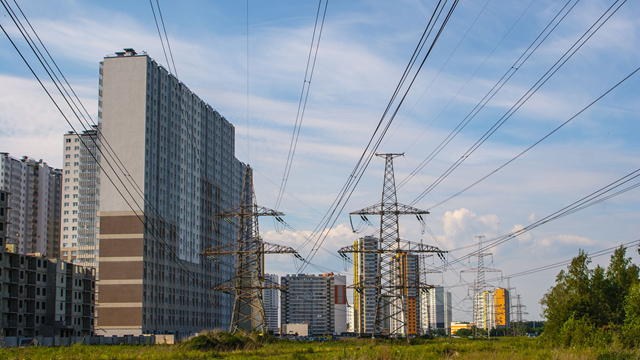
The industry has moved away from oversized footprints in urban and industrial settings where land costs are skyrocketing. Traditional walk-in structures demand significant clearance for human maintenance access, which often leads to inefficient use of available ground area. By switching to a non-walk-in design, engineers can drastically reduce the physical footprint of the electrical installation while maintaining full compliance with international safety standards. This shift allows for denser packing of critical components, making it possible to deploy robust power distribution systems in constrained environments such as underground stations, dense commercial districts, or retrofitting projects where existing infrastructure limits expansion.
Maximizing Efficiency with Vault Mounted Systems
A vault mounted switchgear enclosure offers a unique advantage by integrating protection and distribution into a single, cohesive unit designed for direct burial or semi-buried installation. These systems eliminate the need for extensive above-ground concrete pads or large steel buildings, thereby reducing both material costs and construction time. The modular nature of these enclosures means they can be customized to fit specific voltage levels and load requirements, providing flexibility that traditional fixed structures cannot match. Furthermore, the sealed environment protects sensitive electronic controls from environmental factors like moisture, dust, and corrosion, ensuring long-term reliability with minimal maintenance intervention. This approach not only streamlines the installation process but also enhances operational continuity by reducing the likelihood of environmental-related failures.
Yiwu Shurvolt Electrical Co., Ltd.: Engineering Excellence in Power Distribution
When evaluating manufacturers for such specialized equipment, experience and technical depth matter immensely. Yiwu Shurvolt Electrical Co., Ltd. stands out as a professional power equipment manufacturer located in Yiwu City, Zhejiang Province, China, integrating research and development, production, sales, and service. Since its establishment, the company has been dedicated to the field of power transmission and distribution, committed to providing customers with safe, reliable, and efficient power products and solutions. Through years of industry experience and technical accumulation, the company has gradually developed into a power equipment supplier with strong comprehensive strength. Their ability to combine R&D innovation with scalable manufacturing ensures that clients receive products that meet rigorous global standards. For instance, their non walk-in switchgear enclosures are engineered to withstand harsh conditions while offering compact dimensions, demonstrating their commitment to solving real-world spatial constraints. Such partnerships allow project managers to rely on a supplier that understands the nuances of modern grid demands, from initial design consultation to post-installation support.
Critical Design Features: Removable Gland Plates
One of the most overlooked yet vital components in any switchgear system is the cable entry point. The switchgear enclosure removable gland plate plays a crucial role here, facilitating easier installation and future modifications. Unlike welded or permanently fixed plates, removable designs allow technicians to connect cables quickly and replace them during upgrades without compromising the integrity of the enclosure. This feature significantly reduces downtime during commissioning and subsequent maintenance phases. Additionally, high-quality gland plates ensure proper sealing against water and gas ingress, which is essential for vault-mounted applications where groundwater pressure may be a concern. Selecting equipment with this thoughtful design element demonstrates a manufacturer’s attention to detail and understanding of lifecycle costs. It transforms what could be a tedious, risky procedure into a straightforward task, enhancing overall site safety and efficiency.
Practical Considerations for Implementation
Implementing a new switchgear strategy requires careful planning to avoid common pitfalls. First, assess the actual load requirements and future expansion needs accurately; over-specifying capacity wastes resources, while under-specifying risks future bottlenecks. Second, consider the soil conditions and drainage capabilities if opting for a vault-mounted solution, as proper foundation preparation is key to long-term stability. Third, verify that the chosen enclosure meets all relevant local and international safety codes, including insulation levels and short-circuit withstand ratings. Finally, engage with experienced suppliers early in the design phase to leverage their expertise in optimizing layouts for space efficiency.
Adopting a non-walk-in vault switchgear enclosure is not just about saving space; it is about making intelligent decisions that balance cost, safety, and scalability. Start by auditing your current facility’s spatial limitations and explore how compact, high-performance solutions can integrate into your existing infrastructure. Prioritize vendors with proven track records in R&D and manufacturing quality to ensure your investment delivers value for decades.
Helpful (203)
No help (0)
